ServicesTile Roofing
Tile Roofing in Florence, AZ
Most tile roofs don't fail at the tile. They fail underneath, where the underlayment bakes in the sun until it cracks and lets water reach the deck. We replace that layer, reset your tiles and give you a realistic schedule with a clear arrival window.
What a tile roof actually needs
Concrete and clay tile can outlast the house. The underlayment beneath it usually can't. Older 30-pound felt dries out, shrinks and splits after years of attic heat and direct sun, and once it does, the tiles are only shedding most of the water, not all of it. The rest finds the nail holes, the batten lines and the valleys.
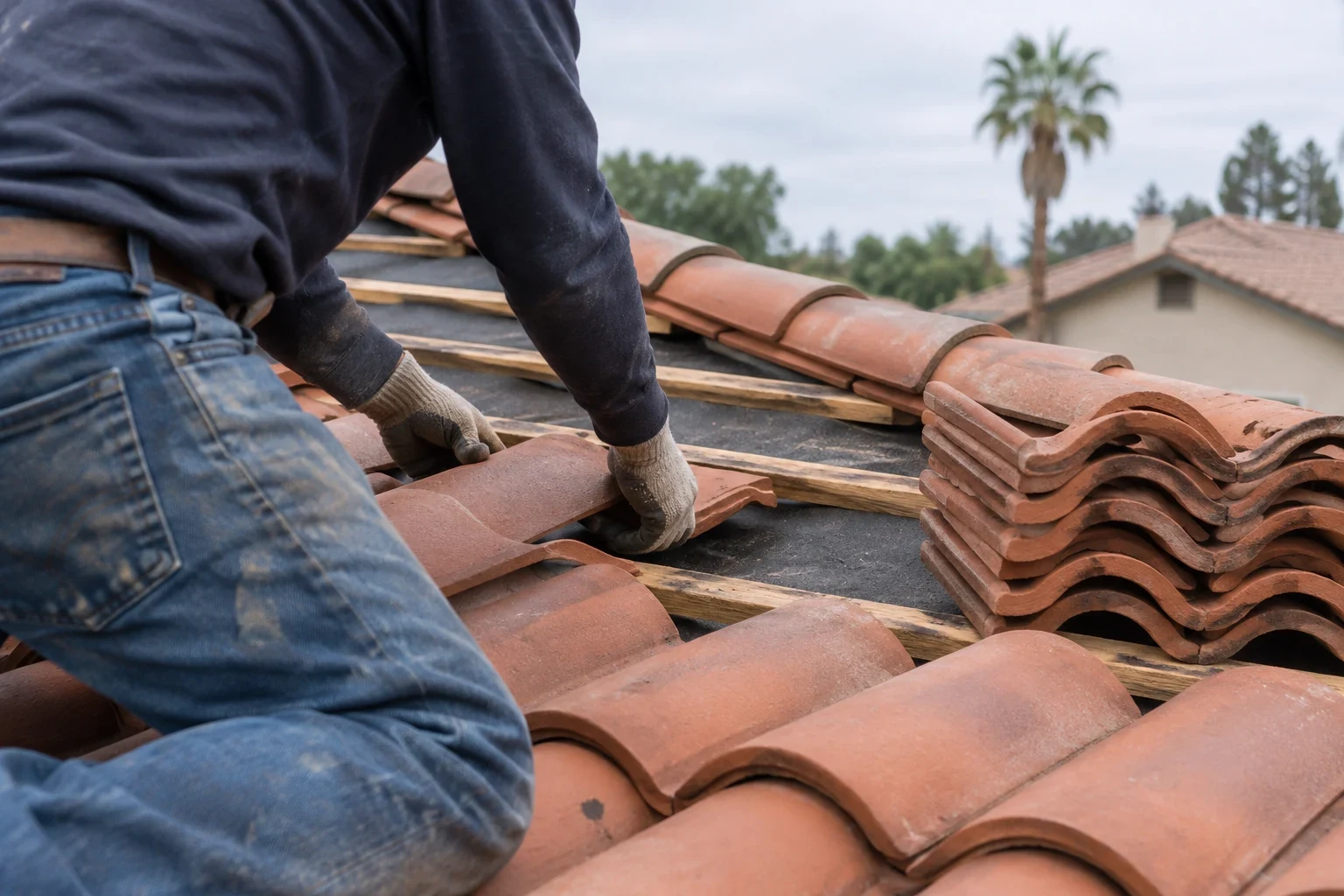
So the usual repair keeps your tile and renews what sits under it. Your existing tiles are stacked aside, fresh underlayment and new flashing go down over the deck, and the same tiles are set back in their courses. If too many tiles are broken or the profile is no longer made, a full new tile roof is the better path, and we explain which one fits your home and why.
Tile work runs on weather. Afternoon heat, wind and monsoon cells all affect when we can safely have a section open, so we plan around them and call you as soon as a date or start time has to move.
What our tile roofing work covers
- Underlayment replacement
- We remove tile section by section, strip the old felt down to the deck and install new underlayment. Each section is dried in before we move on, so your home is never left open overnight.
- Cracked and slipped tile replacement
- Single broken tiles let sun and water reach the underlayment directly. We swap them with matching profile and color where available and refasten tiles that have slid out of their course.
- Valley, wall and pipe flashing
- Valleys carry most of the water on a tile roof, and rusted or undersized valley metal is a frequent leak source. We replace valley metal, step and headwall flashing, and the lead or aluminum flashing around vents.
- Hip and ridge resetting
- Mortar-set ridge caps crack and loosen as the roof expands and contracts each day. We reset them with fresh mortar or a mechanical ridge system, depending on your tile and what's already there.
- Battens, bird stops and decking
- While the tiles are off, we check battens and eave bird stops and replace rotted or soft deck sheathing found under old leaks. You see photos before any extra decking is added.
- Complete new tile roofs
- When the existing tile can't be reused, we install new concrete tile on a fresh underlayment system. Our New Roof Installation and Roof Replacement pages cover those larger projects in more detail.
Signs your tile roof needs work
Ceiling stains after a monsoon rain
A brown ring that shows up after a heavy summer storm usually means water passed the tile and found a gap in the underlayment or flashing.
Cracked, slipped or missing tiles
Visible from the yard, these leave the underlayment exposed to UV, which breaks it down much faster than shaded felt.
Loose or crumbling ridge mortar
Gaps along the hips and ridge let wind-driven rain in and can let caps shift or fall.
A roof 20 or more years old
Even with good-looking tile, original felt underlayment from that era is often brittle. Pieces of black felt in the gutter line or at the eaves are a strong hint.
Daylight or damp spots in the attic
Light through the deck or dark staining on the sheathing points to a failed area that needs attention before the next rain.
How a tile roof job runs
- 1
Phone call and site visit
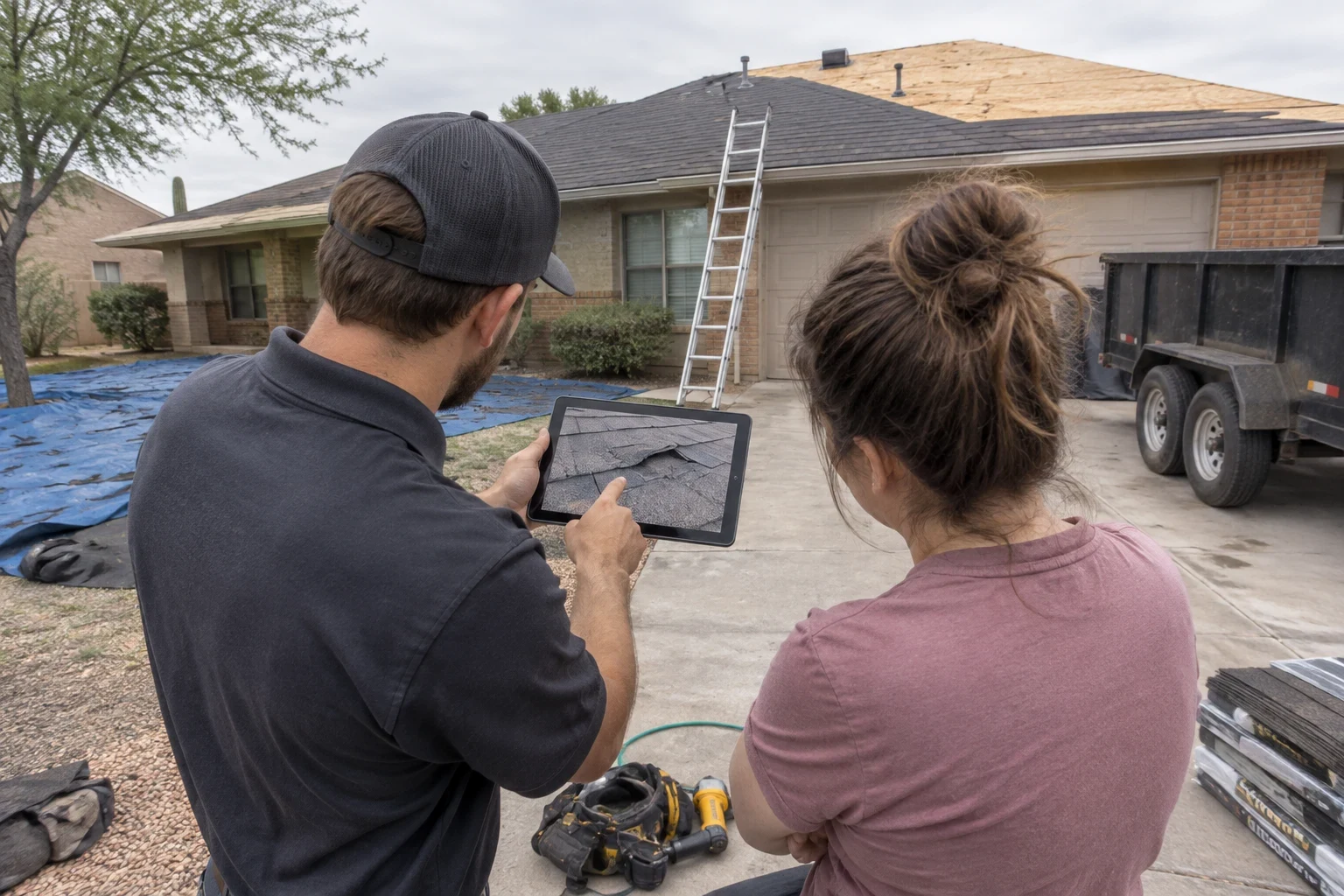
You call, describe what you're seeing, and we set a visit with an arrival window you can plan around. On the roof we lift a few tiles to check the underlayment, battens and flashing.
- 2
Written estimate with a timeline
You get a line-item estimate and a realistic number of working days, including how weather might affect it. Most single-story relays take a few days; larger or steeper roofs take longer.
- 3
Work day by day
Crews start early to beat the afternoon heat. Tiles are carefully stacked on the roof, the old underlayment comes off, and each section is dried in before we leave. If wind or a storm forecast forces a change, we call you with the new plan.
- 4
Relay, cleanup and walkthrough
Tiles go back on, broken ones are replaced, and ridges are reset. We clear felt scraps and nails from your yard and walk you through photos of the finished work.
What moves the price of tile roofing
Tile roofing is priced by the work hidden under the tile as much as the tile itself. We can give you a real number after seeing the roof, and your written estimate shows each item separately so nothing appears later without a conversation.
- Roof size and pitch
- More squares and steeper slopes mean more labor, more staging and slower handling of heavy tile.
- How much tile can be reused
- Older concrete tile breaks during removal at different rates. Discontinued profiles may need salvaged or substitute tile, which affects cost.
- Underlayment choice
- Heavier felt and synthetic underlayments differ in cost and in how well they hold up to attic heat. We explain the tradeoff for your roof.
- Deck and flashing condition
- Soft sheathing, rotted battens or corroded valley metal add material and time, and you'll see photos before we replace them.
Tile roofing questions
Something not covered here? (520) 335-3498
Can you reuse my existing tiles?
Usually, yes. Most concrete tile can be lifted and relaid, and we plan for some breakage along the way. If your profile is discontinued, we'll talk about pulling matching tiles from a less visible slope or using a close substitute.
How long will my tile roof project take?
A typical underlayment replacement on a single-story home runs several working days. Size, pitch and weather change that, so your estimate includes a realistic range. We update you if heat, wind or rain moves the schedule.
Is it safe to do this during monsoon season?
It can be. We open only as much roof as we can dry in the same day and watch the forecast closely. If a storm is building, we cover the work and reschedule rather than take the risk.
Can I walk on my tile roof to check it?
We'd rather you didn't. Tile cracks easily under a footstep in the wrong spot, and a broken tile can start a leak. Describe what you see from the ground and we'll take a look.
What credentials and coverage come with the work?
We're an Arizona KB-2 licensed contractor. Our tile roofing work carries a 10-year labor warranty, and we go over what it covers when we review your estimate with you.
Get a tile roof schedule you can count on
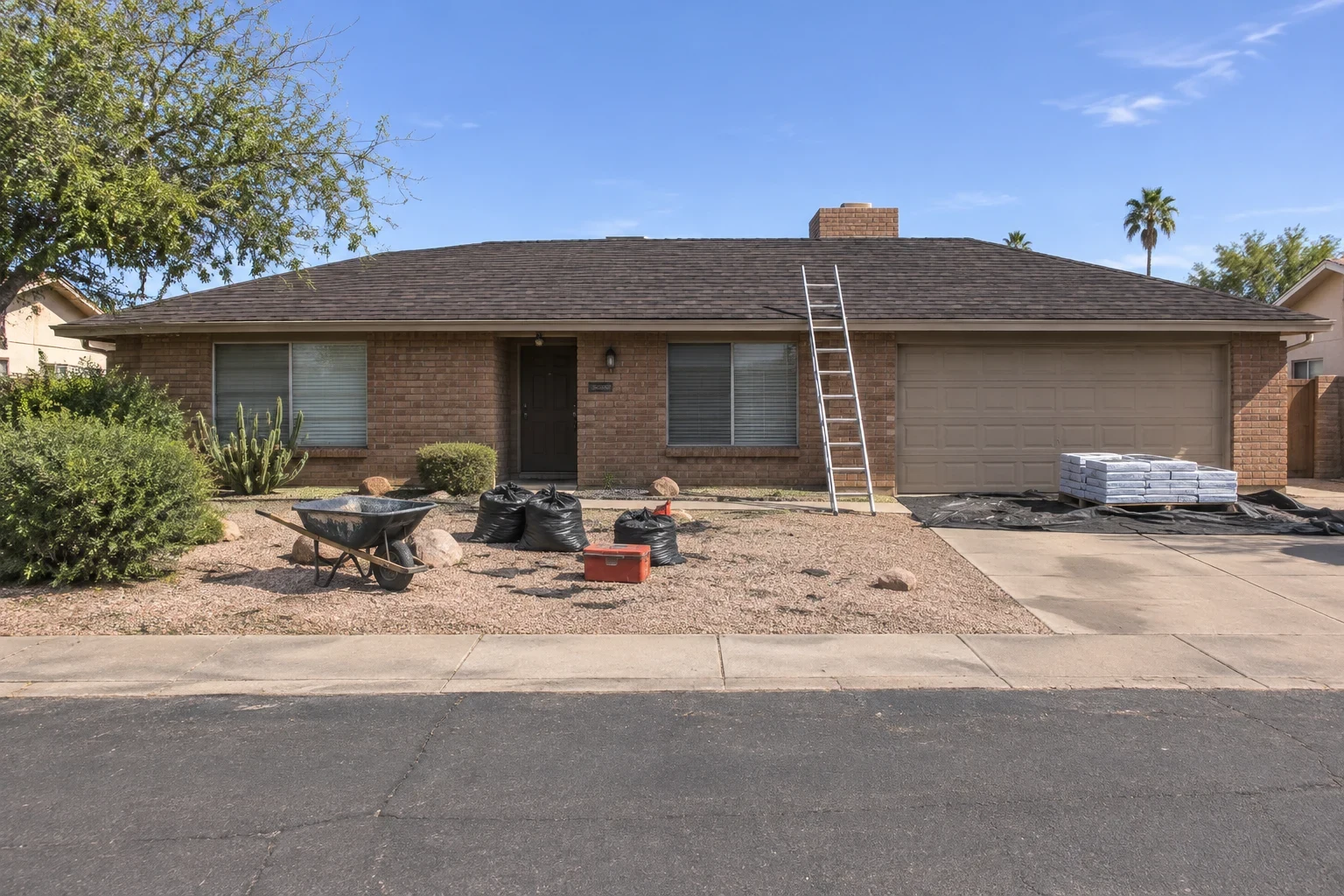
Tell us what your roof is doing and we'll set a visit with a clear arrival window. You'll know the plan, the timeline and what happens if the weather changes it.