ServicesFoam Roofing
Foam Roofing in Florence, AZ
We spray, recoat and repair polyurethane foam roofs on low-slope and flat homes. Foam only goes down on a dry deck in calm air, so we set your date around the forecast, give you an arrival window and call you if the weather moves the plan.
What a foam roof is and when it makes sense
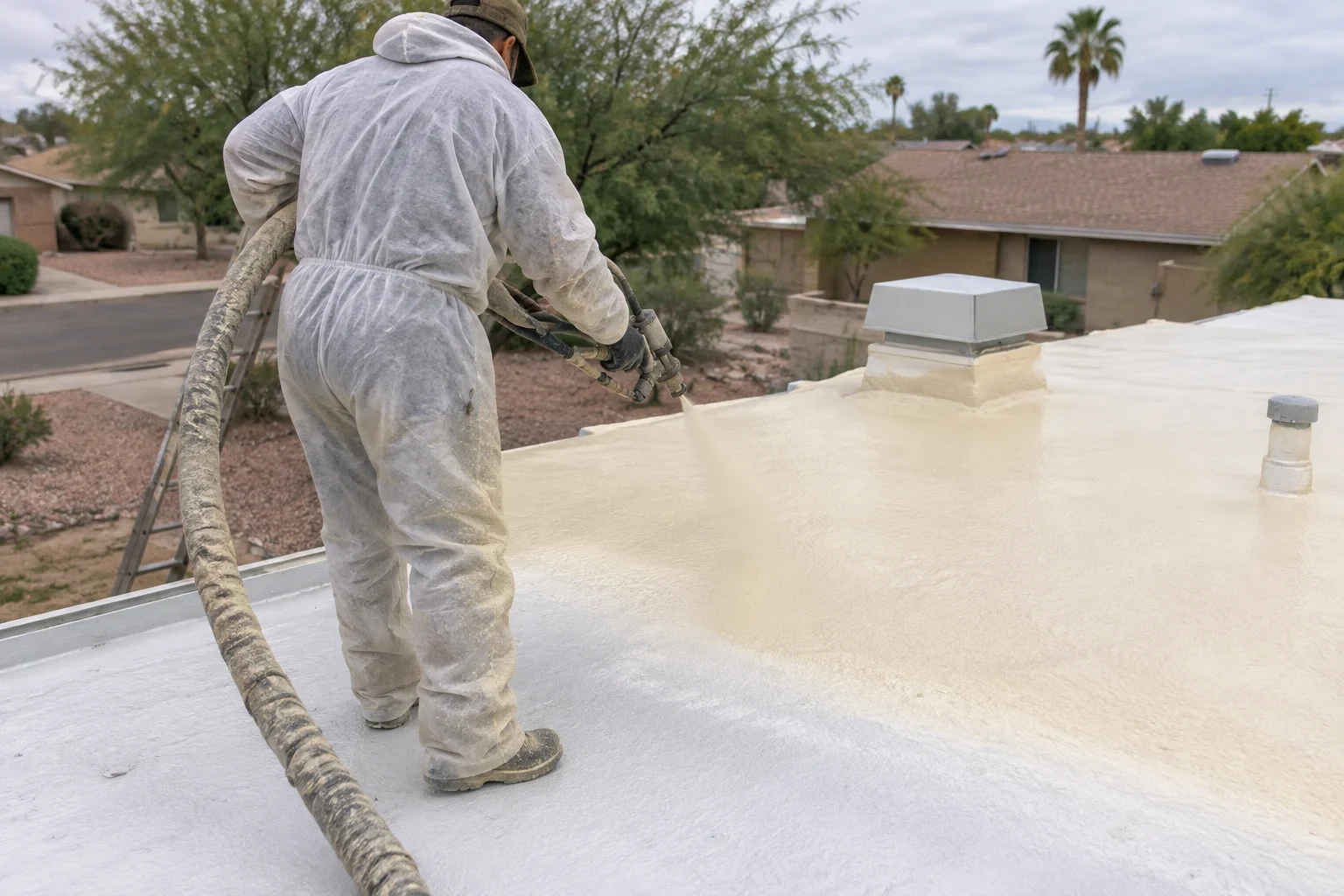
A spray polyurethane foam (SPF) roof is two liquids mixed at the spray gun. They expand into a closed-cell foam that bonds to the deck and to itself, which leaves a single surface with no seams or laps. On top of the foam goes an elastomeric coating, usually acrylic or silicone, often with roofing granules broadcast into the wet coat. The foam keeps water out and insulates. The coating protects the foam from sunlight.
That last part matters. Bare foam breaks down under UV and turns brown and powdery within months. Most foam roof problems we see trace back to a coating that wore thin and was never renewed. A foam roof that gets recoated on time can last for decades.
Foam is a good call for flat and low-slope roofs with parapets, scuppers and lots of rooftop equipment, because it sprays around curbs and penetrations without flashing seams. If your roof has some pitch and you are weighing other materials, our flat roofing and roof replacement pages cover the alternatives.
What our foam roofing work covers
New SPF roofs
We prepare the deck, spray foam in lifts to the specified thickness, slope it toward drains and scuppers to limit ponding, and finish with a base coat and top coat of elastomeric coating.
Recoating existing foam
We pressure wash, repair any damaged foam, prime where the coating calls for it, then apply new coating to the thickness the product requires. This is the routine maintenance that keeps foam working.
Foam over an existing roof
Foam can often go over old built-up or foam roofing, but only if the layers below are dry and firmly adhered. We probe suspect areas and cut out wet material first, because foam sealed over trapped moisture will blister.
Spot repairs
Bird pecks, foot-traffic gouges, blisters and cracks at parapet walls get cut back to sound foam, refilled and recoated so the repair is sealed against sun and water.
Overspray protection
Foam and coating mist can drift. We mask windows, walls and equipment, and ask you to move vehicles before spraying starts.
Signs your foam roof needs attention
Chalky or thin coating
If the coating rubs off on your hand or you can see tan foam showing through, the UV barrier is failing. Recoating now costs far less than replacing degraded foam later.
Brown, crumbling foam
Exposed foam that has turned dark and dusty has already lost material. It has to be ground back to firm foam before anything new will bond.
Blisters or soft spots
Raised bubbles usually mean moisture or a lost bond underneath. Press gently. If the surface gives or crunches, have it looked at before the rain gets in.
Water that stays for days
Ponding that sits more than two days after a storm speeds coating wear and points to low spots that need building up with foam.
Small holes from birds
Birds peck into foam for nesting material. Each hole opens the foam to UV and water.
Ceiling stains below parapets
Leaks often start where the foam meets a parapet wall or scupper, since those edges flex most as the roof heats and cools.
How a foam roof job runs
- 1
Look, measure and explain
We walk the roof, probe any suspect areas for moisture, measure the area and note equipment and drainage. You get a written, line-item quote that spells out foam thickness and coating type.
- 2
Pick a weather window
Foam needs a dry surface and low wind, and fresh coating needs time to cure before rain. We book a date with that in mind, give you an arrival window, and call ahead if wind or a monsoon storm forces a change.
- 3
Prep and protect
We mask the house and equipment, clean the surface, and remove wet or loose material. Early starts let us spray before afternoon wind picks up.
- 4
Spray and coat
Foam goes on in lifts, then the base coat and top coat follow on the schedule the coating needs. A typical home roof takes a few days from prep to final coat.
- 5
Clean up and walk through
We remove masking, clean overspray, and show you the finished roof and photos of what we found and fixed.
What moves the price of a foam roof
Foam is priced mainly by roof area, then adjusted for the work needed before and after the spray gun comes out. Your quote lists each part separately. We walk you through every line so you know what you are paying for and why it is there.
- Condition of the existing roof
- Dry layers that are still firmly stuck to the deck can often stay in place. Soaked insulation or foam that has separated from the layer below must come off first. That removal, plus the material to fill the gap, is extra time and cost on the job.
- Foam thickness
- Thicker foam adds insulation and lets us build slope toward drains, but every added inch means more material.
- Coating type and thickness
- Acrylic and silicone coatings differ in cost, recoat compatibility and how they handle standing water. Thicker coating lasts longer between recoats.
- Equipment and edges
- Air conditioning units, vents, skylights, parapets and scuppers all need careful detailing and masking, which takes time.
Foam roofing questions
Something not covered here? (520) 335-3498
How often does a foam roof need recoating?
It depends on the coating and how thick it went on. Many acrylic systems need recoating every several years, and thicker silicone coats can go longer. We check coating thickness and wear when we see the roof and tell you honestly whether it is due.
Can you spray foam during monsoon season?
Yes, but with care. Afternoon storms and gusty wind are common then, so we start early, watch the forecast closely, and will call you to reschedule rather than spray foam on a damp deck or coat ahead of rain.
Is there a warranty on your foam work?
Our foam roofing comes with a 10-year labor warranty. Keeping the coating renewed on schedule is part of keeping a foam roof sound, and we will tell you what that maintenance looks like.
What contractor license covers this work?
We are an Arizona KB-2 licensed contractor. That classification covers residential work such as spraying, coating and repairing the roof on your home.
Can I walk on a foam roof?
Normal foot traffic for servicing an air conditioner is fine. Sharp objects, dropped tools and heavy point loads can gouge the foam, so we can add walk pads along regular service paths.
Get a foam roof date you can plan around
Tell us about your roof and we will explain the options, the timing and what affects the price. You get your quote by phone and a clear arrival window for the work.